Dental implants are permanent replacement options for missing teeth. A dental implant consists of a small, biocompatible titanium post surgically implanted in the jawbone below the gum line. The titanium post fuses with the jawbone to serve as a sturdy artificial root for a prosthetic tooth.
Restoration options depend on the number of teeth missing. Single implants are restored with a dental crown, while multiple missing teeth are restored with a dental bridge or denture.
Parts of a Dental Implant
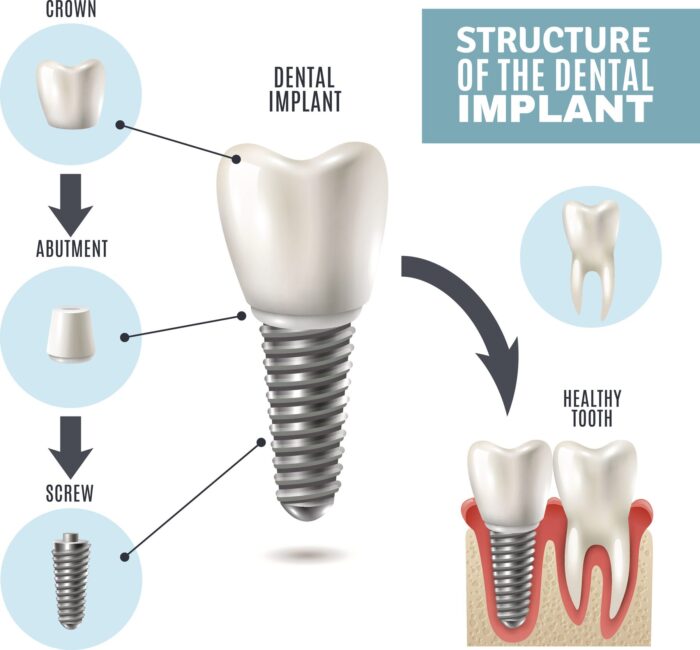
The parts of a dental implant include three distinct components: the implant post, the abutment, and the prosthetic tooth.
-
The implant post is the bottom segment of the system. This cylinder-shaped component sits just below the gum line and resembles a screw. Biocompatible titanium allows the post to fuse with the jawbone, creating a permanent bond. Dr. Bradley Dean, a Plano, TX periodontist, surgically places these posts to act as the new tooth root.
-
The abutment is the small connector piece that links the implant post to the visible tooth. This component is attached to the post typically 3–6 months after the initial surgery, once osseointegration (bone fusion) is complete. The abutment sits at the gum line to support the final dental prosthesis.
-
The prosthetic tooth is the visible restoration that functions like a natural tooth. A dental crown is cemented or screwed onto the abutment for single tooth replacements. Dental bridges or dentures are used for multiple teeth and snap securely into place. The prosthesis is color-matched to blend seamlessly with existing natural teeth.
What are the Benefits of Dental Implants?
When replacing missing teeth, dental implants offer significant benefits beyond basic tooth replacement. They are anchored directly into your jawbone, acting as artificial roots that the bone can grow around. This stimulation of bone growth helps prevent the jawbone deterioration that typically follows tooth loss, preserving the natural structure of your face and supporting long-term oral health.
Functionally, dental implants provide a stable and comfortable foundation for replacement teeth. They allow you to chew your favorite foods confidently, speak clearly without worry, and smile knowing your teeth stay securely in place. This stability and functionality make implants superior to many other tooth replacement options.
With proper care, including regular brushing and flossing, dental implants can last for decades. Unlike other solutions that may require frequent repairs or replacements, implants are a durable, long-term investment. Although the initial cost may be higher, their longevity makes them a cost-effective choice over time.
Importantly, dental implants do not rely on adjacent teeth for support, which helps preserve the health of your remaining natural teeth. They also maintain facial structure by preventing bone loss, offering a solution that looks, feels, and functions like real teeth.
Overall, dental implants provide a comprehensive approach to restoring your smile and oral health, protecting your bone and gum tissue while delivering lasting comfort and confidence.
Learn More About Dental Implants
- Dental Implants in Plano, TX
- Benefits of Dental Implants
- Dental Implants Process
- Dental Implants FAQ
- Cost of Dental Implants
- Dental Implants vs Dentures
- Types of Dental Implants
- All on Four®
- Zygoma Dental Implants
- Implant Dentures
- Single Dental Implants
- Dental Implants for Multiple Missing Teeth
- Emergency Dental Implants